
Acoustic Wave Therapy in Lindenhurst, NY
Sound waves through skin into tissue, breaking down scar tissue and prompting new blood vessels to form. No surgery, no medication, and you walk out and carry on with your day.
What It Is
When the usual options have run out
Chronic pain is difficult to get lasting relief from. Medication works for some, surgery is the right answer for a few, and a great many people end up somewhere in between with neither having solved it. Acoustic Wave Therapy is a non-invasive option for that group.
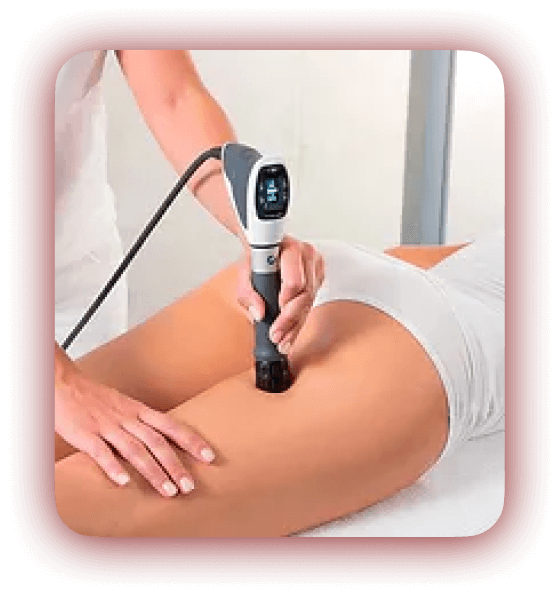
It uses high-frequency sound waves to promote healing and pain relief. The waves pass through the skin into the underlying tissue, breaking down scar tissue and stimulating the production of new blood vessels. That increased blood flow is what drives the healing process and reduces the inflammation behind the pain.
Nothing is cut and nothing is prescribed. It is the least invasive thing on this list and one of the few that most patients have never heard of before someone recommends it to them.
The Mechanism
What the waves are doing down there
Start the pulse and watch what happens to the scar tissue.
Scar tissue and calcium deposits sit in the tissue and stay there. Press start to see what the waves do to them.
Your Session
Ten to thirty minutes, gel and a handheld device
Gel goes on
Your therapist applies a gel to the affected area. That is the entirety of the preparation. Nothing to swallow, nothing to change into, no recovery to plan around.
The device does the work
A handheld device delivers the sound waves into the area, targeting the calcium deposits. It is relatively painless and most patients report only a mild sensation while it is happening.
Ten to thirty minutes
Session length depends on how severe the condition is. Afterwards you may have some mild soreness or discomfort, which usually settles within a few hours. Bruising can occur.
Depending on the severity and where the pain sits, multiple sessions are often needed to reach the best result. Your practitioner will set that out at your first appointment rather than leaving you to work it out visit by visit.
What It Treats
Where acoustic wave therapy is used
Plantar fasciitis
Heel and foot pain that announces itself with the first step in the morning. One of the most common reasons this treatment gets booked.
Tennis elbow
Repetitive strain at the elbow, where the tissue has stopped healing on its own and rest alone has not resolved it.
Shoulder pain
Including the kind involving calcium deposits, which is what the waves are specifically directed at during treatment.
Chronic musculoskeletal pain
Long-standing soft tissue and joint pain that has not shifted through other routes, which is the largest group of patients here.
Acoustic wave therapy is also used alongside other treatments to enhance the healing process rather than on its own. Here that usually means Active Release Therapy for the restriction around it, or a wider pain management plan where the problem has become bigger than one site.
Why Patients Choose It
Four practical advantages
Non-invasive
No surgery and no medication. Nothing enters the body and nothing is prescribed to take home.
Minimal downtime
Most patients resume their regular activities almost immediately after treatment. No time off to arrange.
Well tolerated
A safe and well-tolerated option with few side effects. Most people describe only a mild sensation during the session.
Works with other care
Used in conjunction with other therapies, including physiotherapy, to enhance the healing process rather than replacing them.
Before You Book
What to expect afterwards
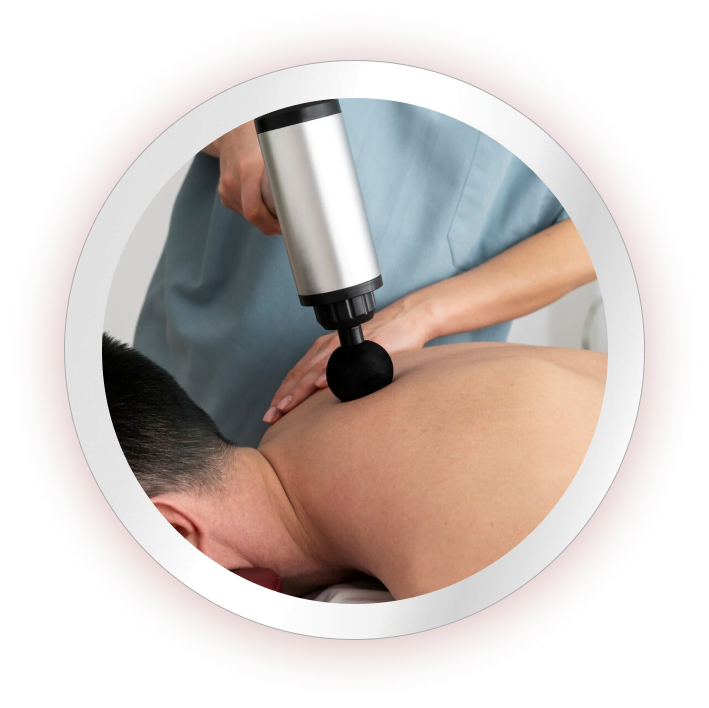
Side effects are few and mild, and worth knowing rather than discovering. Some soreness or discomfort in the treated area is normal and usually settles within a few hours. Bruising can happen.
Bring your medication list and tell your practitioner about anything you are being treated for, particularly anything affecting circulation or clotting. As with everything here, this is complementary care that works alongside your physician rather than instead of them.
Treatment is delivered at our Lindenhurst center inside a practice led since 2004 by Joseph A. D'Antona, DAOM, and benefits are verified before your first visit.
Common Questions
Questions we get asked
Does acoustic wave therapy hurt?
It is relatively painless and most patients report feeling only a mild sensation during treatment. Afterwards you may have some mild soreness or discomfort, which normally settles within a few hours, and bruising can occur.
How many sessions will I need?
Multiple sessions are often required to reach the best result, and the number depends on the severity of your condition and where the pain is. Your practitioner sets that out at your first appointment. Individual results vary.
How long does a session take?
Anywhere from ten to thirty minutes depending on the severity of your condition. There is minimal downtime and most patients resume normal activity almost immediately afterwards.
Can it be combined with other treatments?
Yes. It is used in conjunction with other therapies, including physiotherapy, to enhance the healing process. Here it often runs alongside Active Release Therapy or inside a broader pain management plan.
Is acoustic wave therapy covered by insurance?
Coverage depends on your plan and what is being treated. Submit your details through our intake page and we will verify your benefits before your first visit.
Patient Reviews
What our patients say
★★★★★I have been here 3 times now. What a difference I feel! I highly recommend Christine. I am sure the others are just as good, but I wouldn't know.
Timothy Schell, Google
★★★★★Everyone here is very friendly and makes you feel comfortable. I have had a massage and I've been coming back weekly for acupuncture. Overall great experience and I recommend to all my peers!
Samantha Walsh, Google
Individual results vary. Outcomes depend on your condition, history, and treatment plan.
Related Treatments
What it works alongside
Acoustic wave therapy rarely stands alone in a plan here. Where restriction and adhesion are part of the picture, Active Release Therapy works the same tissue by hand. Where circulation is the bottleneck, cupping approaches it by decompression.
For chronic pain with a broader footprint, acupuncture for pain relief and massage therapy usually sit in the same plan. Your first appointment decides the combination.
Get Started
Book your first session
Send a message and the front desk will get back to you, or call 631-309-2242. Tell us what has been going on and how long, and we will work out whether this is the right tool for it.